
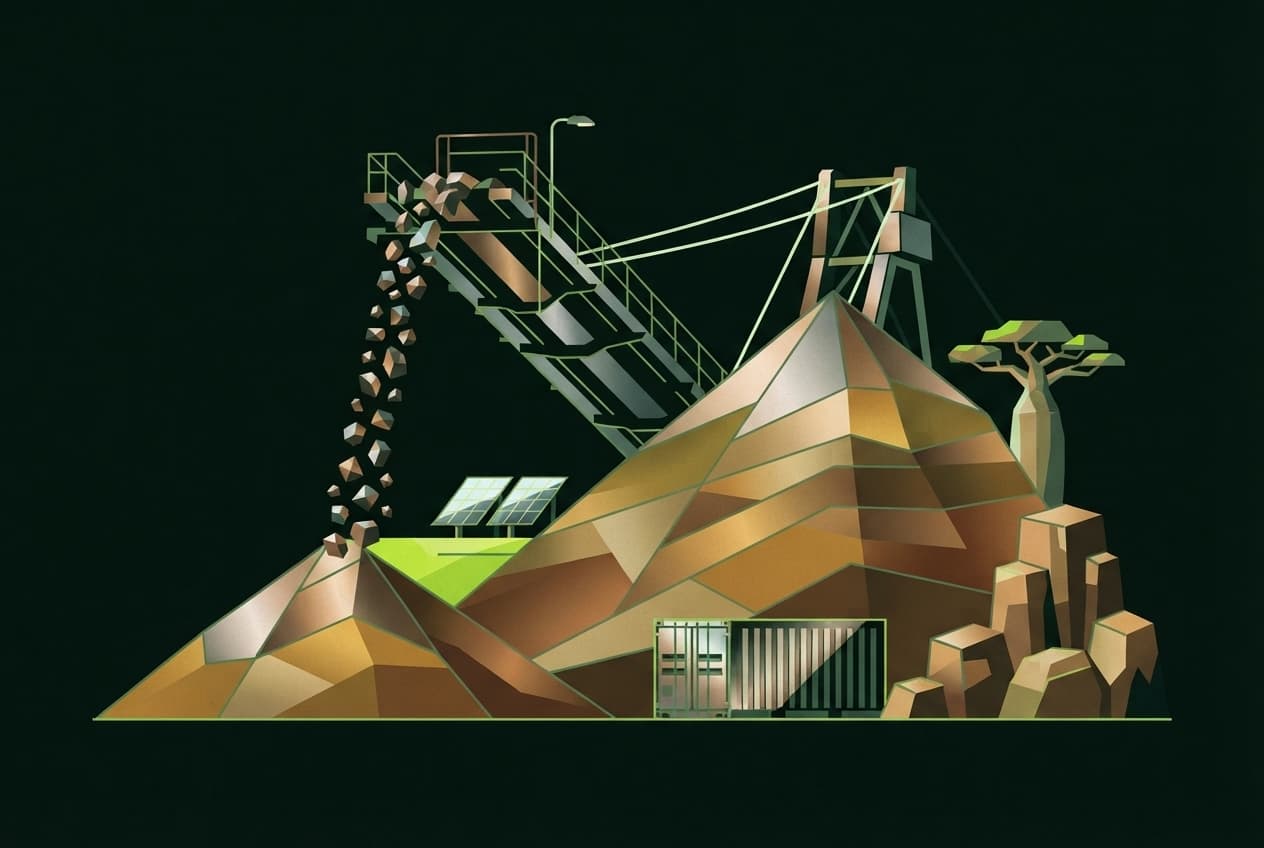
The report identified that Africa holds significant global reserves of minerals such as cobalt, platinum group metals, and phosphate, essential for batteries and green hydrogen technologies. However, the continent's participation in the higher-value stages of the green technology supply chain, including processing, refining, and manufacturing components, remains minimal.
This lack of value addition means that African countries are not translating their mineral strength into substantial industrial activity, well-paid jobs, or improved living standards. While some nations like South Africa, the Democratic Republic of Congo, Zambia, and Zimbabwe engage in limited processing, it often stops at crushing and concentrating ore, rather than producing finished goods.
Asia, particularly China, is identified as a major importer of these raw minerals, highlighting a pattern where African countries supply raw materials while other nations develop the industries that transform them into higher-value products. This dynamic limits Africa's role in the global green economy to that of a consumer rather than a producer.
While national and regional institutions are beginning to implement policies aimed at increasing local processing and investment, these initiatives are mostly in their early stages. The study suggests that greater regional cooperation, including pooling mineral supplies, markets, and infrastructure, could strengthen Africa's negotiating power and foster industrial growth.